Any part of the costume was likely to be decorated with braid,
embroidery, pinking (pricking in patterns) slashing, or puffing, or it might be
encrusted with pearls, jewels, or spangles or trimmed with lace or artificial
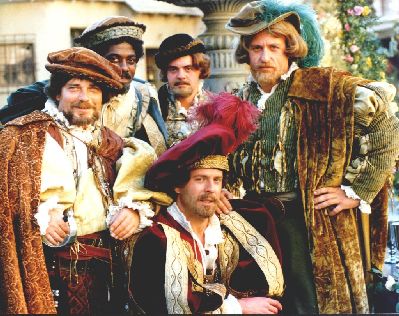
flowers. Men's clothing, like that of women, was gorgeous with color and
ornamentation. The many parts of male attire contributed to the ornate and
colorful effect of the ensemble. Men wore hats even indoors. Feathers and jewels
were normal ornaments.
Shakespeare plays were presented during the warmer months in
circular, open-air public theaters.
In modern times we draw a distinction between "theatrical" and "ordinary" clothes. We even distinguish between plays that are dressed in the clothing of people of another times or places. We consider these to be "costume plays."
English dress during the age of Shakespeare reflected the vitality and the high points of the period. Although the upper class and the even great merchants of earlier eras had also dressed in rich and colorful fabrics, the sixteenth century saw an elaboration in dress that had nor been common. The names of parts of the Elizabethan wardrobe indicate their foreign origins: French hose, French hood, Venetians, Spanish bonnet.
Elizabethan clothing was very intricate, and the amount of time that must have been consumed in donning costumes with so many independent parts to be tied or pinned together is a marvel to the modern observer. The main feminine garment usually consisted of at least two parts: bodice and skirt (known as a kirtle or petti coat). A triangular piece known as a "stomacher" formed the front section and was joined to the bodice proper at the sides by ties, hooks, or pins.
A variety in materials, color, and ornaments characterized the
Elizabethan women's outer garments.
Elizabethan women delighted in gorgeous dress. But despite the richness of their attire, men frequently outshone them in complexity of costume and the variety of cuts the contemporary fashion provided.
Lastly, the costumes and sets of Shakespeare's time influenced the production of the plays. The costumes aided in the visual affects of the plays as did the lighting and the sound effects. The stages and sets created a realistic setting for a specific location. The different style of stages were changed to the rapid growth of Shakespeare's plays.
|
